Things to Do in Reykjavík with Kids: Complete Guide
Geothermal pools with slides, Hallgrímskirkja's tower, an indoor volcano experience at Harpa, and a preserved Viking longhouse — a practical local guide for families in Reykjavík.
By Sofia Park· Published 3 May 2026
Reykjavík is a practical family destination. The city is compact and mostly flat, the geothermal pools include children's areas and waterslides, several major museums admit under-18s free or at reduced rates, and a range of indoor attractions makes rainy days manageable. This guide covers the best family activities by neighbourhood, practical logistics, and the seasonal questions that affect how much any given trip will cost and deliver.
In this guide:
- Is there much to do in Reykjavik with kids?
- The best family neighbourhoods in the reykjavík area
- Top ranked activities for families in reykjavik city
- Getting around without a car in the reykjavik town centre
- What is the best time to visit Iceland with children?
- What currency is used in Reykjavik?
- Is Reykjavik expensive to eat out with kids?
- Can you go to the Blue Lagoon if it's raining?
- What is the wettest month in Reykjavik?
- Day trips from the iceland capital reykjavik with children
- Where to begin your family trip
Is There Much to Do in Reykjavik?
Reykjavík has substantial family-friendly provision for a capital of approximately 139,000 people. The city has geothermal pools with slides and shallow areas, multiple museums with free or reduced child entry, a walkable harbour waterfront, and year-round indoor experiences. Most of the main family attractions cluster within two kilometres of the old harbour.
The reykjavík area suits families who want a mix of outdoor activity and indoor options. The geothermal pools — sundlaugar — are the city's most reliable family asset in any weather. Laugardalslaug in the Laugardalur valley has a waterslide, a children's shallow pool, and multiple hot pots; it is the pool that local families actually use. Sundhöllin on Barónsstígur, a ten-minute walk from Laugavegur, is the most central option. Both charge approximately ISK 1,000–1,200 for adults and around ISK 400–600 for children in 2026.
The city's museums include entry for under-18s free at Þjóðminjasafn Íslands (National Museum of Iceland) on Suðurgata and at several of the city's smaller institutions. Check current terms at Visit Reykjavík.
TIP: The Reykjavík City Card covers entry to most public pools, several museums, and unlimited Strætó bus travel. For a family doing three or more attractions per day, it typically covers its own cost — check current pricing at visitreykjavik.is before buying.
The Best Family Neighbourhoods in the Reykjavík Area
The reykjavík area is divided into distinct districts, each with a different character for families.
Miðborg (City Centre) and Laugavegur
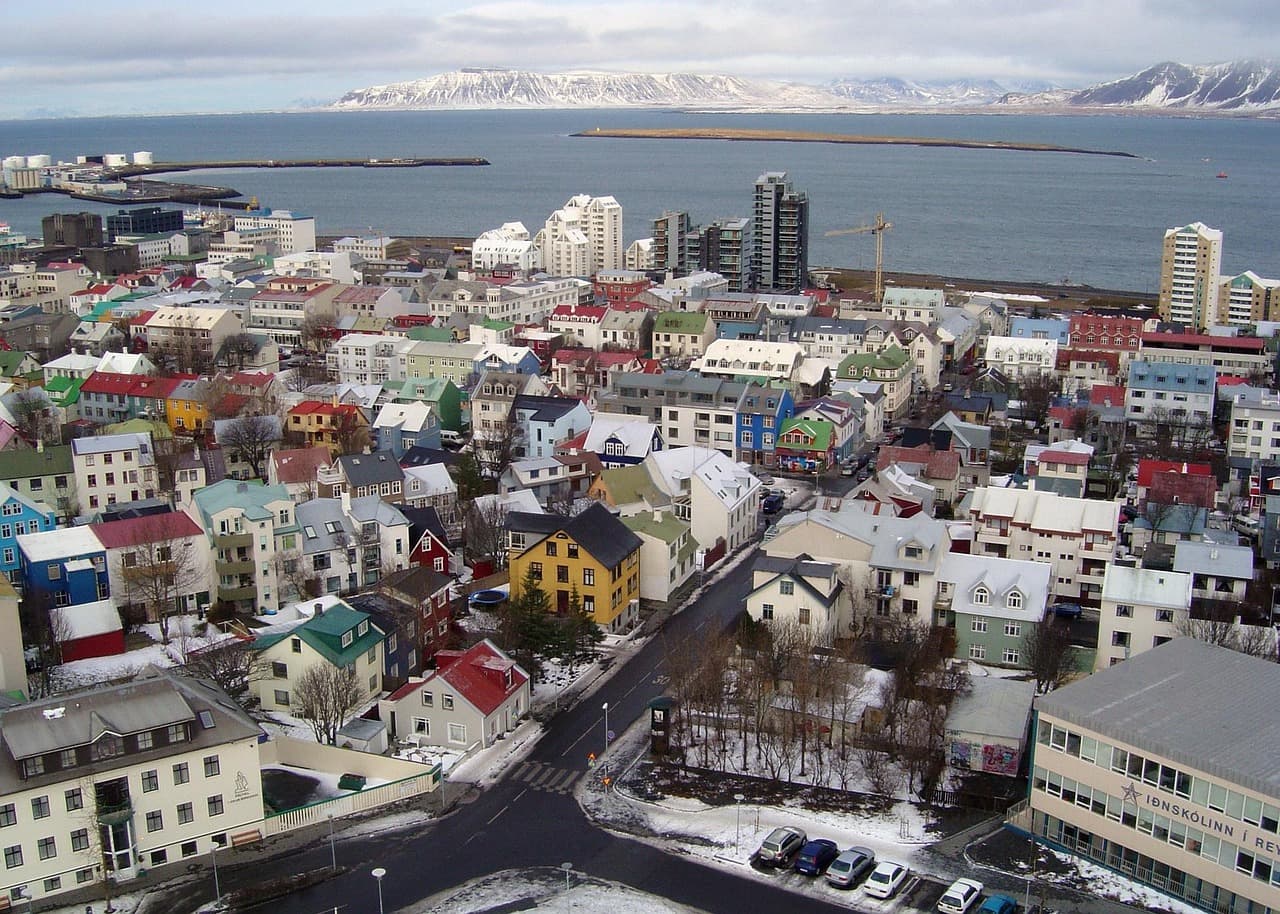
The main city centre around Laugavegur is the most practical base for families. Streets are largely flat; distances between attractions are short. The city pond Tjörnin (south of the city hall) is a free and reliably engaging stop for younger children — ducks, geese, and swans are resident year-round. The walkable loop from Laugavegur to Hallgrímskirkja via Skólavörðustígur takes around 30 minutes at a slow family pace and passes the highest concentration of street art in the city.
Old Harbour (*Gamla Höfnin*) and Harpa
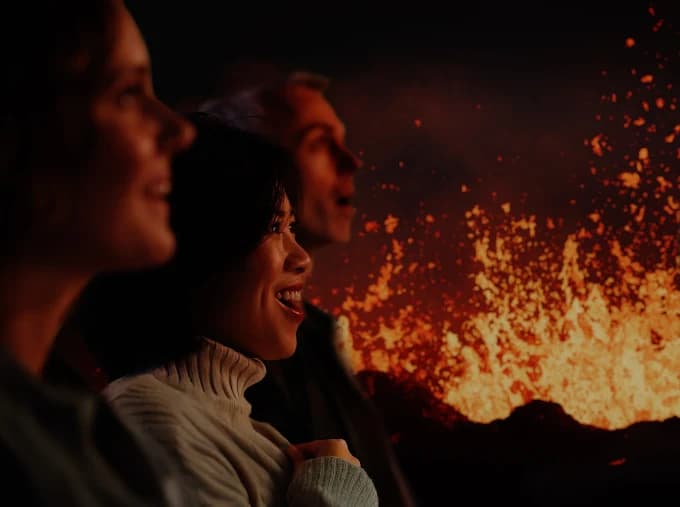
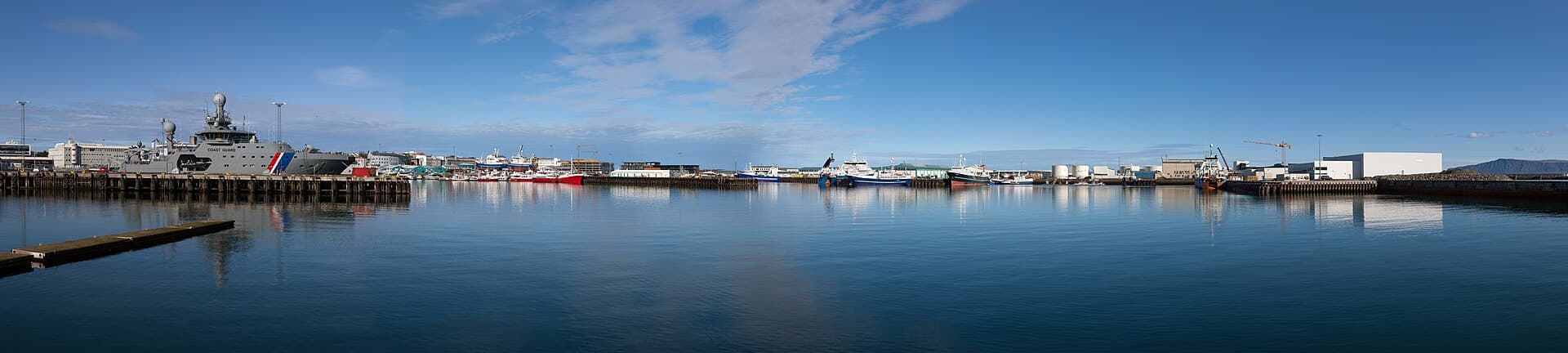
The harbour waterfront north of Laugavegur connects Harpa Concert Hall in the east to the working harbour in the west. The promenade is flat and car-free. Harpa is the home of Volcano Express — a cinematic indoor volcano experience with a 30-minute pre-show featuring live eruption footage, an interactive eruption map, and a live earthquake monitor, followed by a 10-minute motion-seated ride with real heat effects. It is suitable for ages 4 and up and runs daily 10:00–20:00 year-round. The pre-show alone covers the geology behind the Reykjanes Peninsula eruption cycle in accessible terms — useful context before any day trip south.
Laugardalur
The Laugardalur valley, approximately two kilometres east of Hlemmur Square, is the most family-dense district in the city. It contains Laugardalslaug, the Grasagarður (botanical garden), a family sports complex with skating in winter, and a zoo and farm park. Bus 14 runs directly from Hlemmur Square. This is the neighbourhood most visitors skip and most locals consider essential.
Top Ranked Activities for Families in Reykjavik City
The following list is ordered by the combination of age range, weather resilience, and practical accessibility from the reykjavik city centre.
- Volcano Express at Harpa Concert Hall — indoor, all ages 4+, daily 10:00–20:00
- Laugardalslaug pool complex — outdoor/indoor, all ages, bus 14 from Hlemmur
- Hallgrímskirkja tower — all ages, tower elevator, city views
- Landnámssýningan (Settlement Exhibition) on Aðalstræti — ages 7+, strong Viking content
- Þjóðminjasafn Íslands (National Museum of Iceland) on Suðurgata — ages 6+, under-18 free
- Tjörnin city pond — ages 0+, free, central, stroller-accessible
- Hlemmur Mathöll food hall — all ages, no reservation, flexible portions
LOCALS' CHOICE: Tjörnin pond costs nothing, engages children under 5 reliably, and is five minutes from Laugavegur. Take a short detour via City Hall, bring bread, and budget 30–40 minutes before walking to Hlemmur Mathöll for lunch.
Getting Around Without a Car in the Reykjavík Town Centre
The reykjavik town centre is walkable for most family activities. Laugavegur to Hallgrímskirkja is 10 minutes. Laugavegur to the old harbour is 10 minutes north. Laugavegur to Þjóðminjasafn (National Museum) is 15 minutes south.
For Laugardalur, bus 14 from Hlemmur Square is the practical route — the journey takes around 10 minutes. The Strætó app shows real-time departures and sells digital tickets. Single adult fares run around ISK 490–590 in 2026; children typically travel free or at reduced rates — check Strætó for current child fare bands.
Strætó low-floor buses accommodate prams at the front doors. Some cobblestone streets in the old town (particularly around Aðalstræti) are manageable but not smooth for pushchairs — worth noting before bringing a wide-wheel pram.
What Is the Best Time to Visit Iceland?
Summer (June–August) is the easiest season for families with children of any age. Days are long — near-continuous daylight around the summer solstice on 21 June — all outdoor attractions are accessible, and temperatures in Reykjavík average 10–15°C. July is the peak month for visitor numbers; booking accommodation three or more months in advance is standard for popular dates.
Winter (November–February) is viable for families with older children, particularly around Christmas when the city has a full calendar of seasonal events and northern lights are possible on clear nights. Daytime in December runs to around four to five hours, which limits outdoor activity for young children.
Spring (April–May) and autumn (September–October) offer the best combination of value and comfort for families. Shoulder-season prices apply, crowds are significantly smaller, and daylight in May is sufficient for full outdoor days. According to Visit Iceland, spring and autumn consistently rate well in visitor satisfaction surveys.
A practical seasonal summary:
- June–August: longest days, all attractions open, highest accommodation prices
- September–October: autumn colours, quieter, good value, shorter days
- November–February: northern lights possible, Christmas events, very short days
- March–May: improving light, F-roads mostly still closed, best value
What Currency Is Used in Reykjavik?
The currency in Reykjavík is the Icelandic króna (ISK). Reykjavík is almost entirely cashless — card payment is accepted at every restaurant, pool, museum, café, and food stall. Carrying cash is optional rather than necessary for the vast majority of family activities in the city.
ATMs are available at major banks on Laugavegur and near Hlemmur Square. Exchange rates vary between providers; card payments at the point of sale typically offer reasonable rates without the conversion fees some ATMs charge. For families, the cashless infrastructure means that pool admission, museum entry, and food hall meals can all be paid by contactless card without any pre-planning.
Is Reykjavik Expensive to Eat Out?
Reykjavík is expensive for eating out by most European standards. A main course at a mid-range restaurant on Laugavegur typically runs ISK 4,500–7,000 per adult in 2026. A family of four at a sit-down restaurant with drinks can reach ISK 25,000–35,000.
The food halls are the practical family solution. Hlemmur Mathöll at the east end of Laugavegur has multiple independent kitchens, no reservations, and flexible portions — individual dishes run ISK 2,000–3,500. Grandi Mathöll at the harbour operates on the same model. Bæjarins Beztu Pylsur on Tryggvagata — the hot-dog stand — charges under ISK 1,000 per hot dog and is a reliable stop for children who are resistant to more adventurous eating.
Supermarkets are useful for breakfast supplies. Bónus is the cheapest chain (yellow building); Krónan is a step up; Nettó has more central locations. Most family apartments and guesthouses in the city have kitchen facilities.
PRICE GUIDE 2026: Hlemmur Mathöll family lunch (4 people) — expect ISK 12,000–18,000. Hot dogs at Bæjarins Beztu Pylsur — under ISK 1,000 each. Coffee on Laugavegur — ISK 700–1,000. Laugardalslaug pool entry per adult — approximately ISK 1,000–1,200.
Can You Go to the Blue Lagoon if It's Raining?
The Blue Lagoon operates in all weather. Rain does not affect operations, and many visitors find the site better in overcast conditions — less direct sun, more steam, and slightly smaller crowds. The geothermal water holds at around 37–39°C regardless of air temperature or rainfall.
The more significant question for families is whether it is open at all. The Blue Lagoon is on the Reykjanes Peninsula, approximately 50 kilometres southwest of Reykjavík, and has temporarily closed multiple times since 2023 due to volcanic activity in the nearby Svartsengi system. Before travelling south with children, check bluelagoon.is for current operational status and Icelandic Civil Protection for road access and eruption alerts. The minimum age for entry varies by ticket type — confirm on the Blue Lagoon website. Advance booking is required in all seasons.
What Is the Wettest Month in Reykjavik?
October is statistically the wettest month in Reykjavík, with average precipitation of around 90–100mm. January and February are close behind. May, June, and July are the driest months, though rain can arrive in any month. The Icelandic Meteorological Office publishes hourly forecasts — checking the evening before a planned outdoor trip is standard practice.
For families, wind is a more significant factor than rainfall alone. Atlantic low-pressure systems produce horizontal rain and strong wind chill, which is uncomfortable for children even in summer. Packing for a family trip:
- Waterproof outer layer and waterproof trousers for each person
- Waterproof boots with grip — old-town cobblestones are uneven
- Thermal base layer and a fleece mid-layer, even in July
- Swim towels for pool visits (most pools sell or rent, but pack your own to save ISK 600–800 per person)
- Hat and gloves for children in any month outside June and July
Day Trips from the Iceland Capital Reykjavík with Children
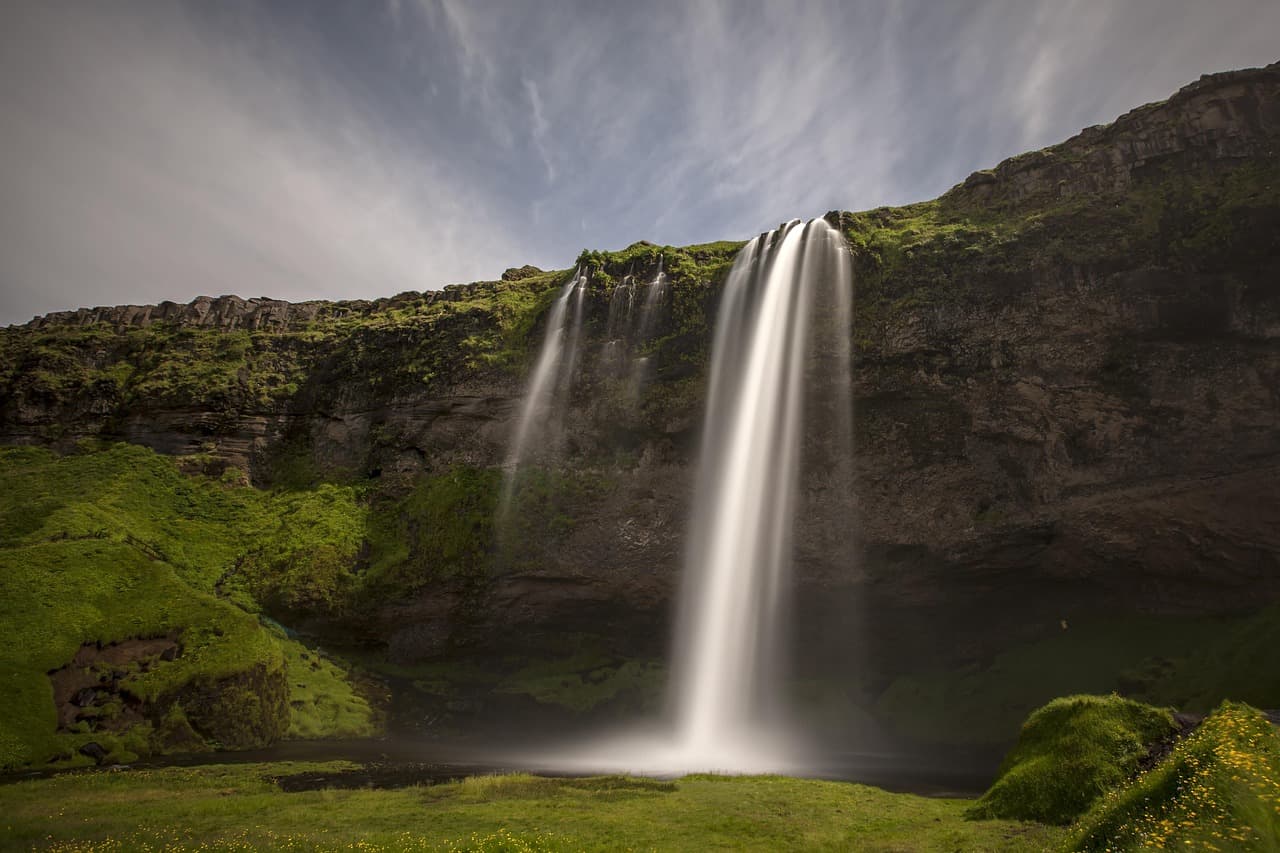
The Golden Circle — Þingvellir National Park, the Geysir geothermal area, and Gullfoss waterfall — is the standard family day trip from the iceland capital reykjavík. Strokkur geyser erupts every five to ten minutes and reliably holds children's attention. The full circuit covers approximately 300 kilometres and takes seven to nine hours. For children under six, this is a long day; for children aged seven and above, it works well as a structured day out.
The Reykjanes Peninsula is a shorter alternative — approximately 90 minutes to the far end — with accessible lava fields from the eruption cycle that began in 2021. Before driving south with children, check Icelandic Civil Protection for current eruption status and road access. Conditions on the peninsula have been variable since 2021 and access to specific lava fields changes without much notice.
Where to Begin Your Family Trip
The strongest starting point for a family visit is the city itself rather than immediately planning day trips. Two days in Reykjavík — pools, Hallgrímskirkja, Harpa, the Settlement Exhibition — gives children and adults a foundation that makes every subsequent excursion more meaningful. For a more detailed look at the pools specifically, the guide to Reykjavík's geothermal pools covers every option in the capital area with transport instructions and opening-hour bands.
Questions & answers
Common questions about Things to Do in Reykjavík with Kids: Complete Guide.
Related Articles
Geothermal Pools Reykjavík: The Complete Local Guide
Reykjavík has ten municipal pools plus the geothermal beach at Nauthólsvík. Here is which ones are worth your time, how much they cost, and the unwritten rules of using them.
Things to Do in Reykjavík: The Complete Visitor Guide
From geothermal pools and volcanic history to street art, harbour walks, and the best lamb soup in the north Atlantic — everything worth doing in Reykjavík, organised by a local.