Things to Do in Reykjavík: The Complete Visitor Guide
From geothermal pools and volcanic history to street art, harbour walks, and the best lamb soup in the north Atlantic — everything worth doing in Reykjavík, organised by a local.
By Sofia Park· Published 1 May 2026
Reykjavík is the world's northernmost capital and a genuinely walkable city — nearly everything worth seeing sits within three kilometres of the old harbour. The city holds around 140,000 residents and the broader capital region about 249,000, yet it punches far above that weight in museums, restaurants, geothermal culture, and access to some of the most dramatic natural landscapes in Europe. This guide covers the city neighbourhood by neighbourhood, day by day, season by season.
In this guide:
- Is there much to do in Reykjavík?
- The five neighbourhoods you will actually walk
- Where to start: a one-day plan for the reykjavik town centre
- Where to spend your second day
- What is the best time to visit Iceland?
- Can I wear jeans in Reykjavík?
- Is Reykjavík expensive to eat out?
- Getting around the reykjavík area without a car
- Day trips from the iceland capital reykjavik
- Can you go to the Blue Lagoon if it's raining?
- What is the wettest month in Reykjavík?
- Where to begin
Is There Much to Do in Reykjavik?
Reykjavík has a concentrated cultural offer for a capital of its size — more museums, geothermal pools, live music venues, and independent restaurants per capita than almost any other city in Northern Europe. Most first-time visitors underestimate it, over-plan day trips, and miss the city's own particular character.
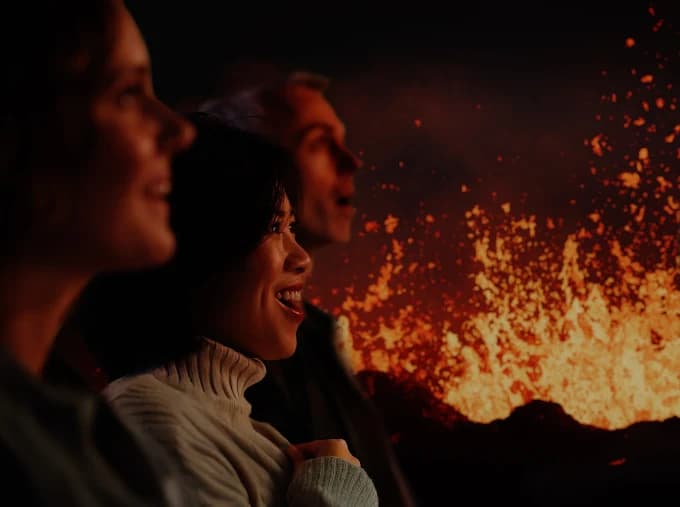
Two to three full days in the city itself reward careful attention. The core sights — Hallgrímskirkja, Harpa Concert Hall, the Settlement Exhibition, the National Museum, and the geothermal pools — are genuinely distinct. The restaurant and café scene along Laugavegur and in the Grandi district is among the most interesting in the north Atlantic. And the geology that shaped the island is legible from the city itself: the Reykjanes lava fields to the south, the Esja mountain to the north, and — at Harpa — Volcano Express, a cinematic indoor experience built around live eruption footage from the 2021–2024 Reykjanes cycle, running daily and entirely weather-independent.
TIP: The Reykjavík City Card covers unlimited public transport, entry to city geothermal pools, and admission to several major museums. Worth buying if visiting more than three attractions in a single day.
Top reasons the city rewards a longer stay:
- The geothermal pools are a daily social institution, not a tourist attraction — experiencing them before 08:00 is a different city
- The Settlement Exhibition on Aðalstræti has a Viking-age longhouse preserved under a glass floor in the city centre
- Street art on Skólavörðustígur and around the harbour district changes each year
- The Laugardalur valley east of the centre has the botanical garden, the city's largest pool complex, and almost no crowds
- Reykjavík's live music scene runs through the week, not just weekends
The Five Neighbourhoods You Will Actually Walk
Reykjavík's city centre — Miðborg — is small enough to walk across in 40 minutes. Each district has a distinct character.
Laugavegur and Skólavörðustígur
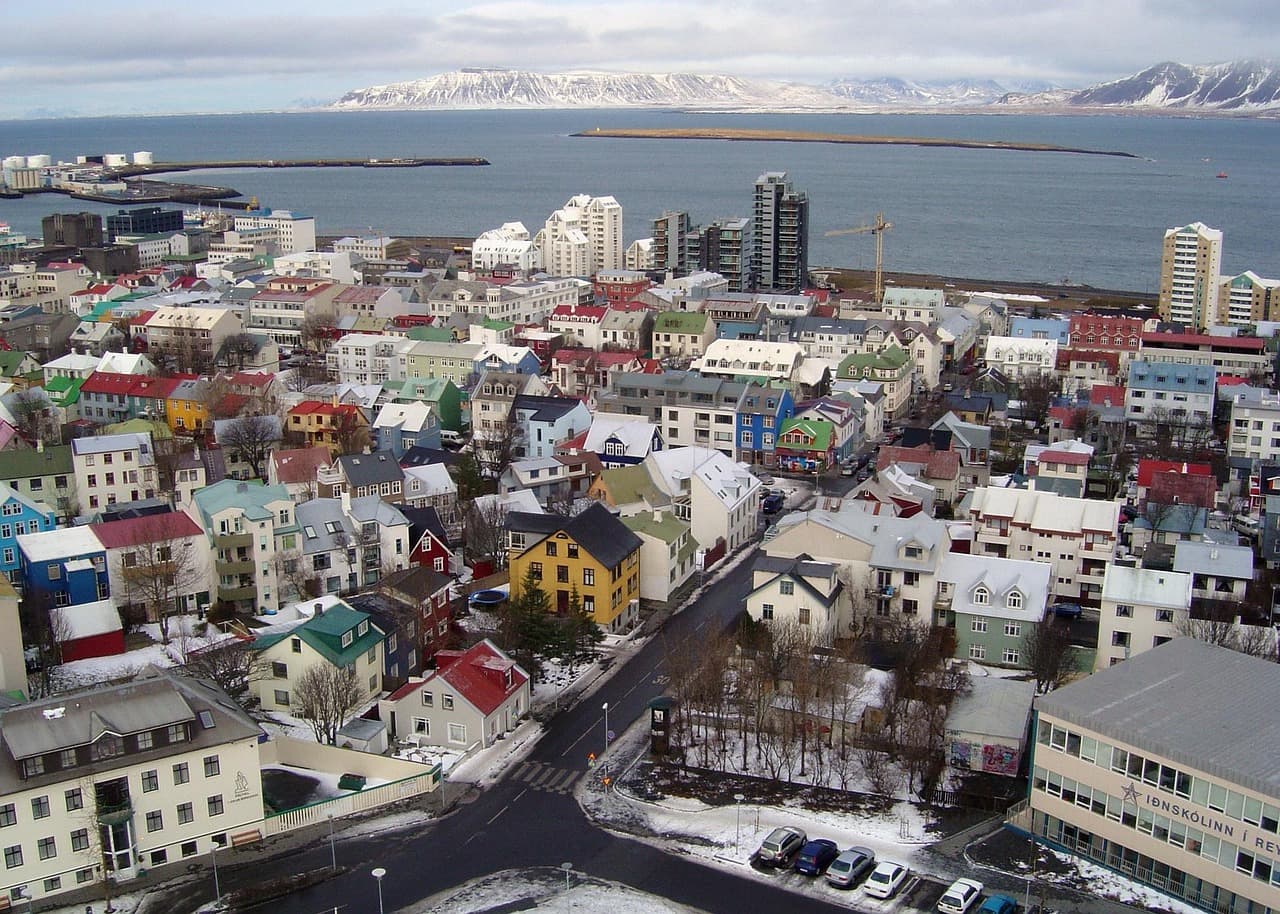
Laugavegur is the main commercial street, running east–west from Hlemmur Square through the old town. At its midpoint, Skólavörðustígur branches south, climbing to Hallgrímskirkja (the Church of Hallgrímur), the city's most recognisable building and the single best orientation point in Reykjavík. The church tower elevator gives a panoramic view across the rooftops to the harbour and Esja. Walk both streets slowly — the craft shops, bookshops, and independent cafés are thickest here.
The Old Harbour (Gamla Höfnin)
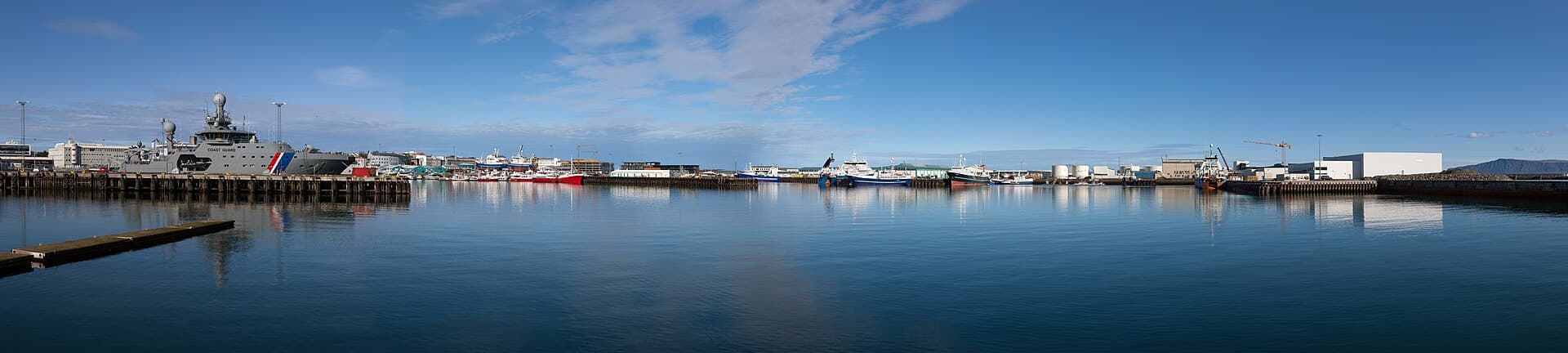
Five minutes north of Laugavegur, the old harbour is where whale-watching vessels depart, fishing boats still dock, and Harpa Concert Hall defines the waterfront. The building is free to enter and worth exploring without a ticket — the interior atrium and harbour views from the upper levels are striking in any light. The Sun Voyager sculpture — Sólfar, a stainless-steel Viking ship — is five minutes east of Harpa along the waterfront promenade.
Grandi
Immediately west of Harpa, Grandi was a working fishing district and is now the city's most active food and design quarter. Grandagarður has the highest independent gallery density in the city. The Kolaportið flea market operates in a harbourside warehouse here on weekends.
Hlemmur
The eastern end of Laugavegur, anchored by Hlemmur Mathöll (Hlemmur food hall) — the most consistent lunch address in the reykjavik city centre. Around it: independent bookshops, the Art Deco geothermal pool Sundhöllin on Barónsstígur (ten minutes' walk), and access to the number 12 and 14 bus routes east.
Laugardalur
Two kilometres east of Hlemmur by bus or a 25-minute walk. The valley holds Laugardalslaug — Reykjavík's largest outdoor pool complex, with 50-metre lanes and multiple hot pots — alongside the botanical garden and a family sports complex. Almost all visitors miss it; almost no local does.
Where to Start: A One-Day Plan for the Reykjavík Town Centre
One full day in the reykjavik town centre covers the essential geography and the city's most distinctive experiences.
Morning
Walk Laugavegur before 09:00 while it still belongs mostly to locals. Stop at a bakery — Brauð & Co on Frakkastígur is a five-minute detour worth taking. Climb Skólavörðustígur to Hallgrímskirkja. Pay the tower fee for the view; it is the only way to understand the city's layout before walking it. Come down through the craft and wool shops on the street itself.
Midday
Walk down to the old harbour and turn right (east) toward Harpa. The building is free to enter and worth ten minutes inside before buying a ticket for anything. If you want the geological context for the lava fields and fissure eruptions you will see on any excursion south, Volcano Express runs shows every 15 minutes from floor K2 — a 30-minute pre-show of live eruption footage followed by a motion-seated ride with real heat effects. It is the most efficient way to understand the Reykjanes volcanic cycle without driving to it.
Afternoon
Cross back west to the old town and find Aðalstræti. The Settlement Exhibition — Landnámssýningan — is on this street: a ninth-century Viking longhouse preserved in situ under a glass floor, with a thorough interpretation of the settlement period. One of the genuinely surprising sites in the city.
Evening
Dinner on Laugavegur (Kol if the budget allows; Hlemmur Mathöll for a less expensive option with multiple kitchens under one roof). The bar and live music scene starts late — most venues run from 23:00 past 03:00 on weekends.
TIP: If you only have one hour in the city, walk west along the harbour from Harpa to Kolaportið, then up Aðalstræti into the old town. That 20-minute route passes the Sun Voyager, the oldest street in the city, and ends at a wool shop.
Where to Spend Your Second Day in the Reykjavík Area
A second day in the reykjavík area earns a visit to the places the one-day plan cannot fit.
Start at a geothermal pool before 08:00 — Sundhöllin on Barónsstígur for the historic Art Deco experience, or Laugardalslaug in Laugardalur for the full complex. Both charge around ISK 1,000–1,200 for adults in 2026; both are open early and run at 28–44°C depending on the lane or hot pot.
After the pool, walk or take a bus to Þjóðminjasafn (National Museum of Iceland) on Suðurgata, near the university. Budget two to three hours. The permanent collection is organised chronologically from the settlement period through to the twentieth century; the Viking-age artefacts — combs, amulets, swords, a bishop's crozier found at Skálholt — are the core of the collection.
In the afternoon, return to Grandi. The area around Grandagarður has the best gallery density in the city, and the Kolaportið flea market runs on weekends from roughly 11:00. The Grandi Mathöll food hall here is a slightly calmer alternative to Hlemmur for lunch.
LOCALS' CHOICE: For a proper Icelandic lunch on a weekday, the canteen-style restaurant at Þjóðminjasafn is consistently good and costs significantly less than Laugavegur options nearby.
What Is the Best Time to Visit Iceland?
The best time to visit Iceland depends on what you are visiting for — the answer changes significantly between summer and winter, and both seasons have strong cases.
Summer (June–August) offers near-constant daylight, the Midnight Sun peaking around the summer solstice on 21 June, open highland roads (F-roads), and active whale-watching season. The city is at its most vibrant. Accommodation is at peak prices — book at least three months ahead for popular dates.
Winter (November–February) gives the best conditions for northern lights viewing on clear nights, a dramatically different atmospheric city, and significantly lower hotel rates. Daylight in December runs to around four to five hours. The northern lights forecast is published by the Icelandic Meteorological Office — Source: Icelandic Met Office — https://en.vedur.is
Spring (April–May) and autumn (September–October) are the most underrated months. Shoulder-season prices apply, crowds are smaller, and the light in May and September is some of the best in Iceland.
- June–August: longest days, most attractions open, highest prices
- September–October: quieter, cheaper, autumn colours in Þingvellir
- November–February: northern lights, low prices, very short days
- March–May: improving light, F-roads still closed, good value
Can I Wear Jeans in Reykjavik?
Yes — Reykjavík is a casual city and jeans are appropriate for almost every setting, including mid-range and good restaurants, concert venues, galleries, and bars. There is no meaningful dress code pressure in any normal tourist context.
The more relevant question is what to wear on top. The city is frequently windy and wet; the primary practical requirement is a windproof, waterproof outer layer. Temperature swings are moderate — Reykjavík rarely drops below -10°C in winter or rises above 20°C in summer — but the combination of Atlantic wind and horizontal rain makes the jacket more important than the jeans underneath it.
Is Reykjavik Expensive to Eat Out?
Yes, by most European standards. Reykjavík is one of the more expensive cities in Northern Europe for eating out, though the quality of ingredients — lamb, fish, dairy — is consistently high.
A main course at a mid-range restaurant typically costs ISK 4,500–7,000 in 2026. A full dinner with drinks at a good restaurant can reach ISK 12,000–18,000 per person. The best-value eating options are in the food halls and at street food level.
PRICE GUIDE: Hlemmur Mathöll individual dishes — ISK 2,000–3,500. Hot dog (pylsur) at Bæjarins Beztu Pylsur on Tryggvagata — under ISK 1,000. Skyr (Icelandic yoghurt) from a supermarket — ISK 400–600.
Best-value eating in the city centre:
- Hlemmur Mathöll (Hlemmur food hall, east end of Laugavegur) — varied, quality, no reservation required
- Grandi Mathöll (Grandi district, harbour) — similar format, harbour location, slightly less crowded
- Bæjarins Beztu Pylsur (Tryggvagata, old harbour) — hot dogs with lamb, pork, and beef; a genuine local institution
- Supermarkets: Krónan and Bónus are cheaper than Hagkaup; Nettó is the most central budget option
Getting Around the Reykjavík Area Without a Car
Reykjavík's city centre is walkable — most major attractions sit within a three-kilometre radius of Harpa. For the Laugardalur valley, the national museums on Suðurgata, and the western suburbs, the Strætó public bus network covers the city adequately.
The main bus hub is at Hlemmur Square (east end of Laugavegur) and at BSÍ bus terminal on Vatnsmýrarvegur, near the domestic airport. The app (Strætó) shows real-time departures and sells digital tickets. Single fares cost around ISK 490–590 in 2026; a 24-hour pass costs around ISK 1,700.
Taxis are widely available but expensive by northern European standards. Ride-hailing apps (particularly Hreyfill) operate in the city. Cycling is practical in summer on the dedicated lanes along the harbour and south coast road.
Day Trips From the Iceland Capital Reykjavik
Reykjavík is the gateway to Iceland's most visited day-trip routes. All are driveable in under two hours from the city.
- The Golden Circle — Þingvellir National Park (the UNESCO rift valley and original parliament site), Geysir geothermal area (Strokkur erupts every five to ten minutes), and Gullfoss waterfall. 300 kilometres round trip; most visitors take six to eight hours.
- The South Coast — Seljalandsfoss and Skógafoss waterfalls, the black sand beach at Reynisfjara, the town of Vík. 200–250 kilometres depending on how far east you drive; eight to ten hours minimum.
- The Reykjanes Peninsula — lava fields, the Bridge Between Continents, and (when open) the Blue Lagoon geothermal spa. 90 minutes from the city centre to the peninsula's far end; check current access before departing — Source: Icelandic Civil Protection — https://almannavarnir.is
- Snæfellsnes Peninsula — the glacier-capped Snæfellsjökull volcano, Kirkjufellsfoss waterfall, and a chain of fishing villages. Better with two days; a long single day from Reykjavík.
Can You Go to the Blue Lagoon if It's Raining?
Yes — the Blue Lagoon operates in all weather conditions and is often better in rain, when steam is more visible and the site is less crowded. The bathing area is entirely outdoors, but the water temperature holds at around 37–39°C regardless of conditions.
The more relevant question in 2026 is whether the Blue Lagoon is open at all. The facility is approximately 50 kilometres southwest of Reykjavík on the Reykjanes Peninsula and has closed temporarily several times since 2023 due to volcanic eruption activity at the nearby Svartsengi system. Before driving south, check current status — Source: Blue Lagoon — https://bluelagoon.is — and road access — Source: Icelandic Civil Protection — https://almannavarnir.is
Booking in advance is strongly recommended regardless of season; same-day entry is not guaranteed.
What Is the Wettest Month in Reykjavik?
October is statistically the wettest month in Reykjavík, with average precipitation of around 90–100mm. January and February are close behind. The driest months are May, June, and July — though rain can arrive in any month and weather in Iceland shifts quickly.
The more useful metric for visitors is wind: Atlantic low-pressure systems arrive throughout the year and the wind is the primary driver of outdoor discomfort. A waterproof, windproof jacket is more important than rainfall statistics for day-to-day comfort.
Source: Icelandic Met Office climate data — https://en.vedur.is
Where to Begin
First-time visitors to Reykjavík consistently do better by giving the city two full days before committing to any excursion. Walk Laugavegur slowly, swim at Sundhöllin before 08:00, spend an afternoon at the Settlement Exhibition on Aðalstræti, and eat in the Grandi district or Hlemmur Mathöll. The geology, the culture, and the city's distinctive character all reveal themselves on foot, not from a tour bus.
For a deeper look at any single part of the city — the pools, the food scene, the street art, or the geological story of the Reykjanes eruptions — the individual area and category guides on this site cover each in more detail.
Questions & answers
Common questions about Things to Do in Reykjavík: The Complete Visitor Guide.
Related Articles
Geothermal Pools Reykjavík: The Complete Local Guide
Reykjavík has ten municipal pools plus the geothermal beach at Nauthólsvík. Here is which ones are worth your time, how much they cost, and the unwritten rules of using them.
Things to Do in Reykjavík with Kids: Complete Guide
Geothermal pools with slides, Hallgrímskirkja's tower, an indoor volcano experience at Harpa, and a preserved Viking longhouse — a practical local guide for families in Reykjavík.